Saju vs. Western astrology: what's actually different
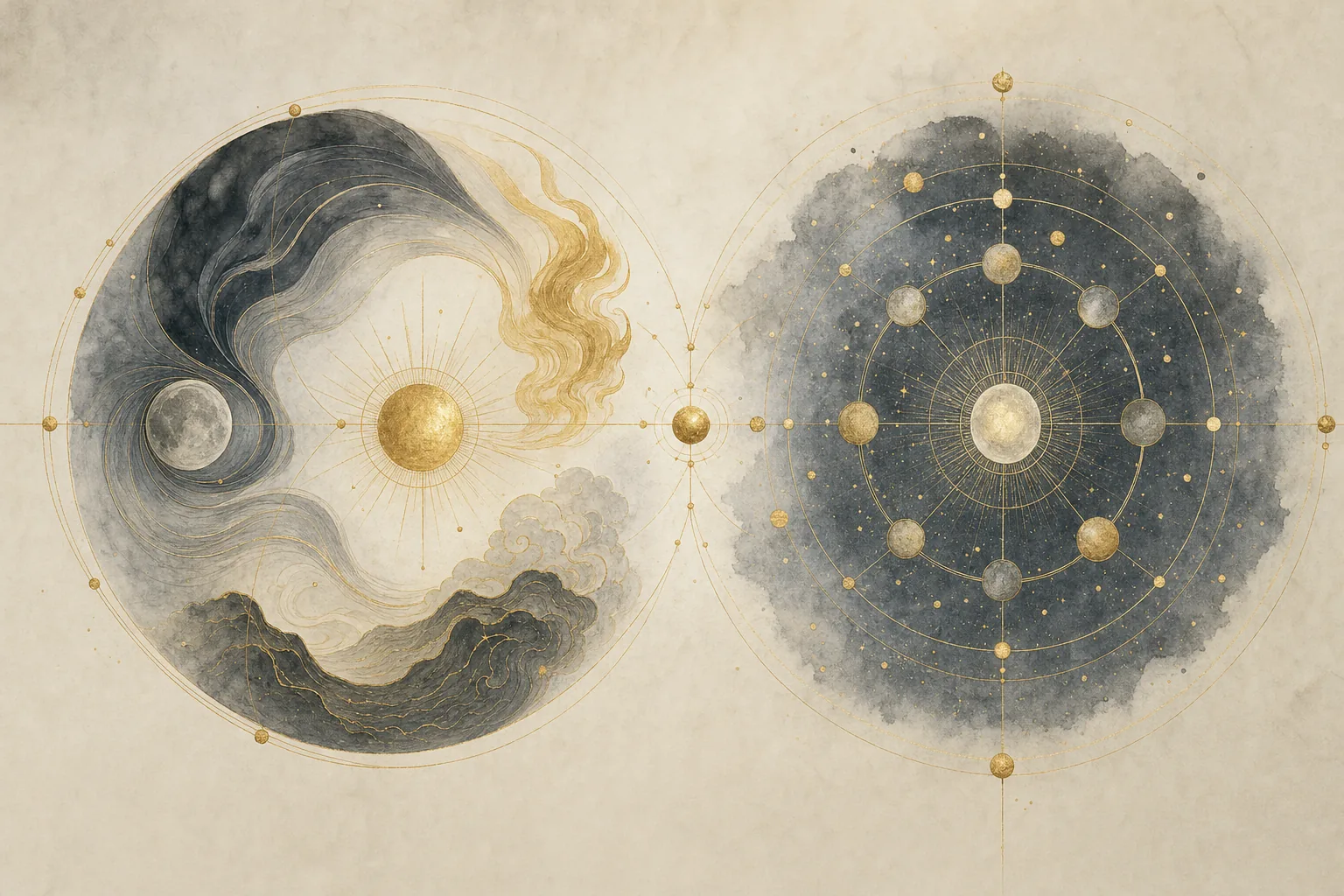
If you know your "sign" — Aries, Libra, Scorpio — you already know a little Western astrology. Korean saju (사주) reads the same raw material, your birth moment, but arrives somewhere completely different. Neither is "more real" than the other; they're different lenses. Here's how they diverge, and what each is good at.
Different sky, different math
Western astrology maps where the planets sat in the zodiac at your birth — sun, moon, rising, and the rest. Its language is planets and houses. Saju doesn't use the planets at all. It's built on the lunisolar calendar and the five elements — Wood, Fire, Earth, Metal, Water — arranged into four pillars from your year, month, day, and hour. Its language is elements and their balance.
| Western astrology | Saju (four pillars) | |
|---|---|---|
| Built on | Planetary positions, zodiac | Five elements, lunisolar calendar |
| Your "core" | Sun sign | Day Master (day-pillar element) |
| Reads | Personality, psychology | Temperament + timing of life seasons |
| Needs birth time? | For rising/houses, yes | For the hour pillar, yes |
Sun sign vs. Day Master
In Western astrology your sun sign is the headline — the "I'm a Gemini" part. In saju, the equivalent anchor is your Day Master: the single element on top of your day pillar that represents you. But there's a key difference. Your sun sign is shared by everyone born across about a month. Your Day Master shifts day by day, and the rest of your chart is unique to your exact birth moment — so saju resolves to something far more individual than a twelve-way split.
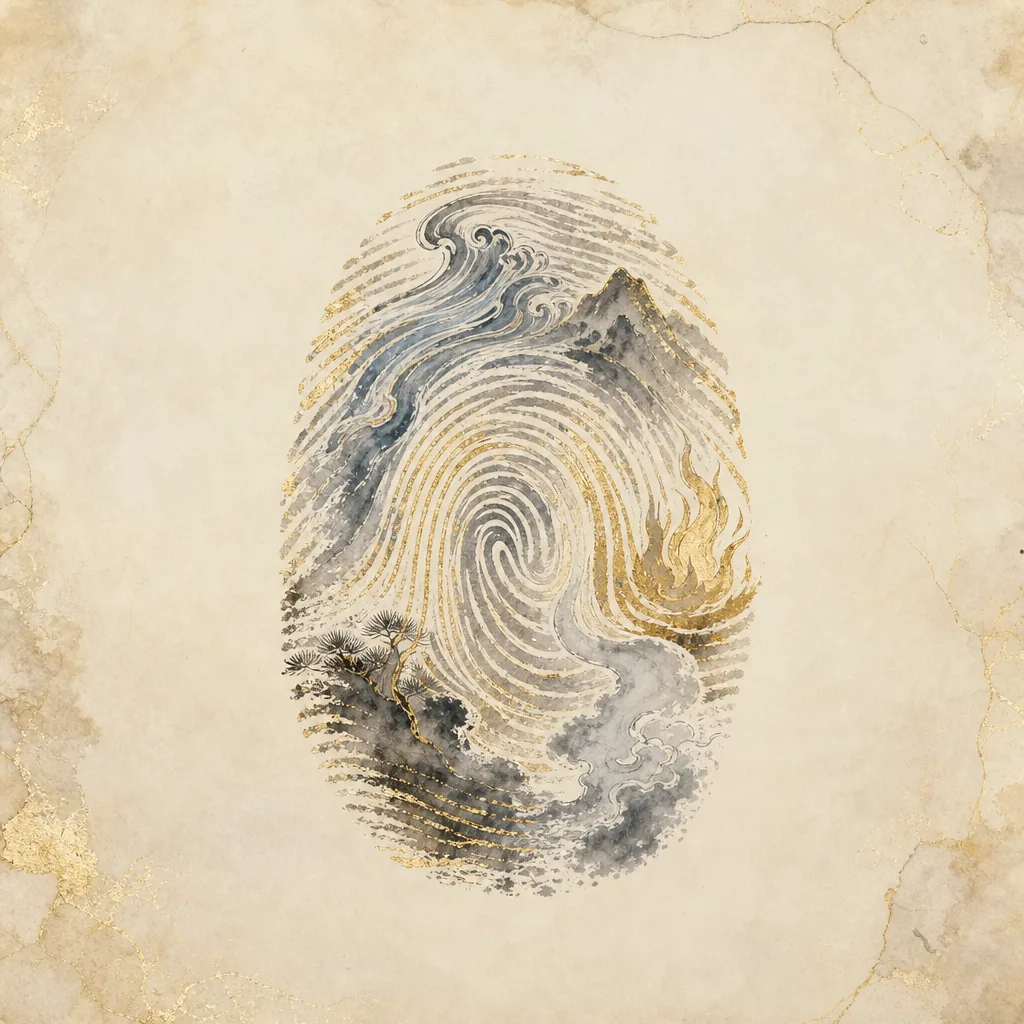
Your sun sign puts you in one of twelve rooms. Your saju chart is closer to a fingerprint.
What each is good at
Western astrology, especially a full natal chart, is rich for psychological self-portrait — how you love, how you think, what drives you. Saju leans into temperament and timing: what you're made of, which seasons of your life run with you or ask more of you, how your elements balance. If Western astrology asks "who am I," saju also asks "and when."
Plenty of people enjoy both. They're not competitors so much as two traditions that noticed the same thing — that the moment you arrive says something about you — and built very different instruments to read it.
If Western astrology asks "who am I," saju also asks "and when."
One thing they share: garbage in, garbage out
Both systems are only as good as the birth data behind them. A wrong birth time throws off your rising sign and your hour pillar. In saju the stakes are a bit higher, because the whole chart is a calculation — the wrong time or an ignored birthplace longitude can change your Day Master, and with it the entire reading.
This is the failure point of most "AI astrology" apps of either flavor: they let a chatbot approximate the chart. Pillar takes the saju side seriously — computing your four pillars in code from true solar time and your real birthplace, then interpreting only from classical sources and flagging what's uncertain instead of inventing it.
Curious what your saju says?
It only takes your birth date, time, and city. Pillar computes your real four-pillars chart in seconds — free.
Reveal my chart →